
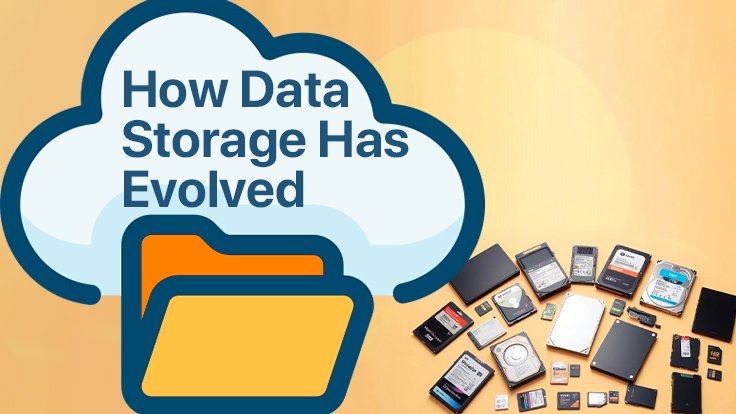
Before flash disks and cloud storage, there were floppy disks.
Back in the 1980s and early 1990s, these large, fragile disks were the main way people moved files between computers. They could store very little, yet at the time, it felt revolutionary. Storage wasn’t about convenience, it was simply about possibility.
As technology advanced into the late 1990s and early 2000s, flash disks began to appear. Storage suddenly became smaller, faster, and portable. Carrying files in your pocket became normal. Students shared assignments easily, music moved freely, and digital life started to feel personal.
Around the mid-2000s, memory cards became popular alongside mobile phones and digital cameras. Tiny chips stored photos, videos, and memories that mattered. But storage was still physical; easy to lose, damage, or corrupt.
Then the biggest shift happened.
With faster internet and smarter devices in the 2010s, storage stopped being something we carried and became something we accessed. Cloud storage allowed users to upload files once and reach them anywhere, on any device. Capacity could grow instantly, backups became automatic, and sharing became effortless.
Privacy evolved too; from protecting physical devices to protecting online accounts.
From floppy disks, to flash disks, to memory cards, and now the cloud data storage has grown with us.
And today, our data doesn’t stay in our pockets anymore.
It follows us.

Leave a Reply